An AI skills matrix is a simple grid that maps the people in a role against the AI skills that role actually uses, scored on a basic scale from aware to independent to teaching others. Built in an afternoon, it replaces guesswork with a diagnosis: you can see exactly where capability is thin before a single course gets built, which is the difference between a training plan that changes how work gets done and one that just generates completion certificates. Industry research on AI adoption keeps pointing to the same gap: organizations are spending on AI training, but a large share cannot connect that spending to any measurable change in performance. The matrix is where that connection starts.
This article walks through how to build one: which skills to include, how to score honestly, how to turn the results into a tiered training plan, and how to keep the matrix alive after launch instead of letting it rot in a spreadsheet.
What Is an AI Skills Matrix?
An AI skills matrix is a competency map for AI capability. Down one side, the people or roles on a team. Across the top, the AI skills that matter for that work. In each cell, a rating of where that person actually is today.
It is deliberately low-tech. The version that works is a spreadsheet or whiteboard grid with three or four rating levels, not an enterprise competency system that takes a quarter to configure. The point is to force a specific question that generic planning skips: which exact AI skills does this role need, and who on the team already has them?
The matrix earned its place in AI planning because of a pattern that keeps repeating. Surveys of workplace AI use have found that a meaningful share of employees already use AI tools their employer never sanctioned, and that many hesitate to admit it. When nobody has mapped actual capability, the official training plan gets written for an imagined audience of beginners while half the team is already experimenting, unguided and unsupervised, in personal accounts. A matrix surfaces that reality before the curriculum gets built around it.
Which AI Skills Belong in the Matrix?
The most common mistake is listing AI skills that sound impressive instead of the ones the work requires. A skills matrix is only useful when its rows and columns come from the job, not from a conference keynote.
A practical approach: pick five to eight skills per role, drawn from what that team actually produces.
- Prompting and task framing for the role’s real workflows: drafting, summarizing, analyzing, first-pass generation.
- Verification and quality control: checking AI output against sources, spotting fabricated citations, numbers, or confident nonsense. This one earns its column in every regulated or customer-facing role.
- Data handling and confidentiality: what can and cannot go into a tool, in plain language specific to the team’s actual documents.
- Tool fluency: the specific sanctioned platforms and features the role is expected to use daily.
- Process redesign: for senior people, recognizing which parts of a workflow AI should absorb and which must stay human.
A customer support team’s matrix looks different from a finance team’s matrix, and it should. If two roles have identical skill columns, one of the columns is probably decorative.
How Do You Score It Without Kidding Yourself?
Three levels is enough. More granularity creates the illusion of precision and slows the assessment to a crawl.
- Aware: knows the skill exists and why it matters. Could follow instructions using it.
- Applying: uses it independently in real work, at acceptable quality.
- Teaching: does it well enough to coach others and set standards.
Two rules keep the scoring honest. First, self-assessment is a starting point, not a result: pair it with a manager check or a short practical exercise, because people systematically overestimate skills they have read about and underestimate skills they use daily without naming them. Second, score against evidence, not vibes. “Applying” means there is a real deliverable from the last month where this skill was used, not that the person attended a webinar on it.
The scoring pass takes one focused hour per team when done as a working session: manager and team lead the grid together, disagreements get argued for two minutes each, then the picture is on the table. Teams that try to make it a formal HR process tend to stall before the grid is ever filled in.

How Do You Turn the Matrix Into a Training Plan?
The matrix earns its keep in what happens next. Read the grid column by column and three patterns point to three different responses.
A whole column is red (everyone at aware): that skill needs a taught foundation, not an email about policy. This becomes a short, mandatory foundation course. In a tiered structure for AI upskilling, this is the baseline layer everyone completes before anything role-specific begins.
The column is mixed (some aware, some applying): this is the classic role-track situation. The people already applying do not need the same course; they need practice scenarios at their level, and the people at aware need the fundamentals first. Grouping by current capability rather than job title prevents the most common complaint about AI training, which is being bored by content pitched three levels too low.
A few people are at teaching while everyone else is at aware: These are the people who should get the deeper builder track, because they are already answering questions informally and doing it without guardrails or recognition. Formalizing them multiplies the training team at almost no cost.
This is the direct bridge to role-based AI training: the matrix is the diagnostic that tells you which tiers to build, how deep each one goes, and who belongs in which. The same skills-first logic is showing up in hiring decisions too; if that overlap interests you, the post on why skills-based hiring is everywhere but the training to back it up is not covers the other half of the gap.
What Does This Look Like in an LMS in Practice?
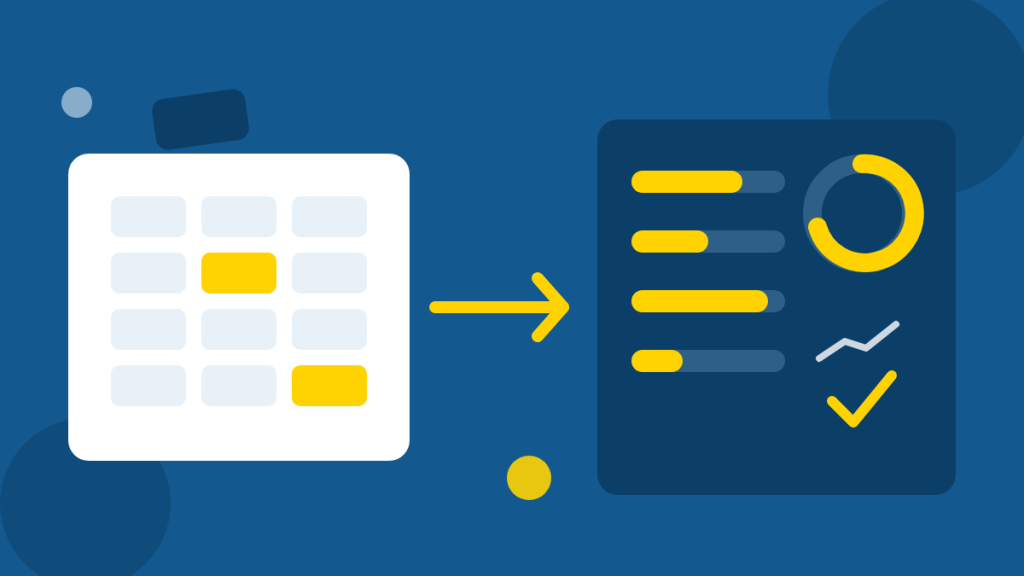
A matrix that stays in a spreadsheet dies there. The teams that get value from it move it into their learning platform, so the diagnosis and the delivery live in the same place and the picture updates itself as people complete training.
In Axis LMS, the mapping is direct. User groups mirror the roles on the matrix, learning paths carry each tier’s course sequence, and prerequisites keep the role tracks gated behind the foundation so nobody skips ahead into scenarios they are not equipped for. Because reporting drills down to the individual, the matrix ratings become verifiable: an “applying” rating stops being a manager’s opinion and becomes a record of completed scenario-based assessments in that skill.
A few Axis capabilities do specific heavy lifting here:
- AI-assisted course creation keeps the curriculum buildable by a small team. Once the matrix identifies the gaps, the content for five role tracks does not have to mean five months of authoring; drafting, examples, and quiz generation can start from AI assistance and get refined by the people who know the work.
- Reporting tied to competencies turns the matrix from a point-in-time snapshot into a live view: coverage per role, per skill, visible to the manager without a data pull.
The communication tools close the loop. Automated reminders and announcements keep the tracks moving between sessions, and because they run on schedule from the platform, the follow-through does not depend on one administrator remembering to chase down a department. For teams weighing what a platform needs to support a plan like this, the LMS buying guide for mid-market teams covers the evaluation criteria in depth.
There is a compounding benefit worth naming: the same records that drive today’s training plan become the evidence trail later. When a client, an auditor, or an executive asks “how do you know your people can do this safely,” the answer is a report, not a shrug. Records that carry forward cleanly across years and platform versions are part of what makes a training operation durable rather than something rebuilt from scratch every time leadership changes.
How Often Should You Revisit the Matrix?
Twice a year at minimum, and after any significant change in the tools the team uses. AI capability decays in one direction only: the tools keep adding features, and yesterday’s “applying” becomes today’s “aware” without anyone doing anything wrong.
The practical rhythm: a light re-score each quarter tied to something people already do (a team meeting, a planning session), and a full rebuild when the role’s toolset changes materially. The re-score should take an hour, not a day. If it takes longer, the skill list has grown beyond what the role needs, which is a sign to prune columns, not to schedule more meetings.
The first matrix is the hardest because it is built from nothing. Every one after it is an update.
FAQ: AI Skills Matrices
How long does it take to build an AI skills matrix?
A working session of one to two hours per team: define five to eight role-relevant skills, agree on the three-level scale, and score the grid together with a manager present. Refinement can happen later; the first useful version should exist the same day.
Should we use software or a spreadsheet?
Start with a spreadsheet. The matrix is a diagnosis, and the thinking matters more than the tool. Move it into the LMS once the training plan is running, so ratings connect to course assignments and completion records instead of living on a static tab.
Who should score the matrix, the employee or the manager?
Both, quickly. Self-assessment captures what people do daily that managers never see; the manager pass catches overestimation. Where the two disagree, a two-minute conversation resolves most of it, and the disagreements themselves are usually informative.
How is an AI skills matrix different from a general competency framework?
A general framework catalogs everything a role does. An AI skills matrix is narrow on purpose: only the capabilities where AI changes how the work gets done. Narrowness is what keeps it fillable in an afternoon and actionable the same week.
Can an AI skills matrix help with compliance?
Yes, indirectly but concretely. Where AI touches regulated processes, the matrix documents which roles need which capability, and LMS records show who completed the corresponding training. That pairing (requirement identified, training delivered, evidence retained) is exactly the shape auditors ask for. For the broader picture, see What Does Audit-Ready Compliance Training Actually Look Like?
What if the team resists being scored?
Frame it around the plan, not the people: the matrix decides what training gets built and for whom, and being scored at “aware” is a scheduling input, not a performance verdict. Teams tend to engage once they see the first training built from their own grid is more relevant than the generic course it replaced.
