How do you blend live training and self-paced courses without the chaos? You pick one system of record, assign the self-paced work as structured pre- and post-work around each live session, automate the reminders and follow-ups, and let the LMS track attendance, completions, and follow-through in the same place. The blending is easy part; the coordination between the two is the first challenge, and that is exactly what a learning management system is built to handle.
Why Does Blended Training Fall Apart Without a System of Record?
Most blended programs do not fail because of the content. They fail in the seams between formats.
Here is the familiar pattern: a live session gets scheduled, someone sends a calendar invite, and the pre-reading exists as a PDF attachment nobody opens. Attendance is tracked on a clipboard or a spreadsheet that lives on one person’s desktop. After the session, the follow-up assignment is emailed manually, if it is emailed at all. Two weeks later, nobody can say who did the pre-work, who showed up, and who finished the follow-up, because the evidence is scattered across inboxes, sheets, and memory.
The failure mode is not laziness. It is the absence of a single source of truth. When the self-paced side and the live side live in different tools, every handoff becomes a manual task, and manual tasks are the first thing that disappears on a busy week.
A blended program runs cleanly when three things are true:
- Every learner has one place to see what is due and when, whether it is a module or a session.
- Every facilitator can see who is prepared before the session starts, not after.
- Every completion, attendance mark, and assessment score lands in the same reporting system.
That is a description of an LMS, not a wish list. Platforms like Axis LMS are designed around this exact loop: self-paced courses with built-in assessments, live and virtual session support, automated communication, and reporting that covers both formats in one view.
What Should Learners Do Before They Walk Into the Room?
Pre-work is where blended programs earn their keep, and where they most often underdeliver. A live session that starts with content delivery wastes the one thing that format is uniquely good at: interaction, questions, and practice with an expert present.
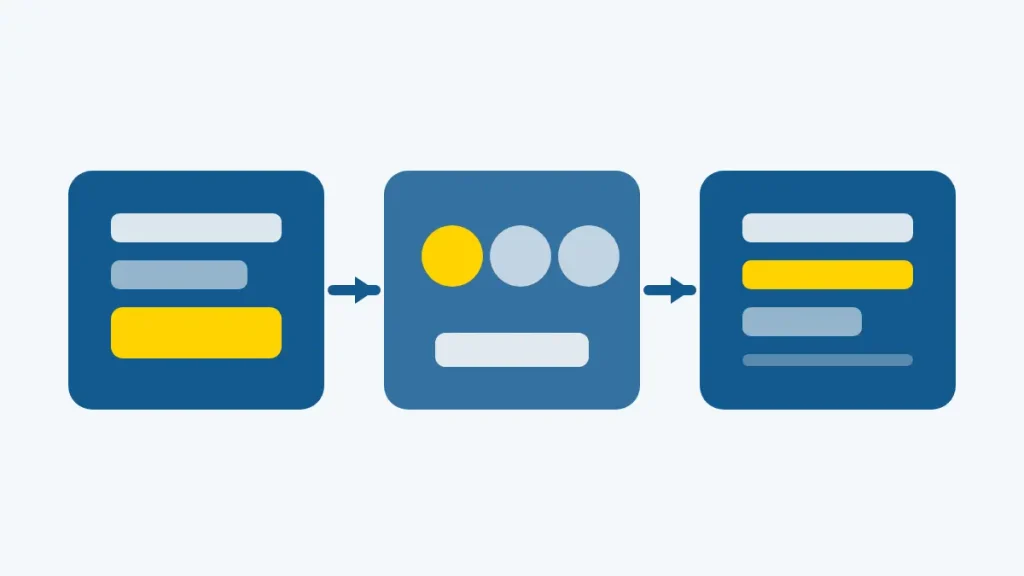
The fix is to move the knowledge transfer into self-paced modules and reserve live time for application. Good pre-work has three properties:
- Short and focused. Twenty to thirty minutes of material beats a two-hour dump. If the pre-work is microlearning, completion rates climb, a pattern covered in depth in Microlearning for People Who Have No Time for Training.
- Checked, not assumed. A short quiz or knowledge check at the end confirms who is actually ready. Axis LMS courses can gate progress on assessment scores, so a facilitator can see readiness before the session, not discover gaps during it.
- Tied to the session agenda. Pre-work should feed directly into the activities planned for the live block. When the module ends with “bring your answers to question 3,” the session starts warm instead of cold.
This structure is sometimes called the flipped model, and it is the single highest-leverage change most blended programs can make. The live instructor stops lecturing and starts coaching, which is where live training beats every asynchronous format.
How Do You Run the Live Session So It Earns Its Time?
Once learners arrive prepared, the live block should be built for what only live can do: discussion, role-play, hands-on practice, and questions that no quiz bank anticipated.
Axis LMS supports instructor-led training with its own scheduling, enrollment, and attendance tracking, so the session lives inside the same system as the courses rather than in a separate calendar someone maintains by hand. Virtual sessions can be delivered and tracked alongside classroom sessions, which matters when the same program runs for a mix of in-person and remote participants. For a walkthrough of the mechanics, Integrating Live Training into Axis LMS covers how sessions, rosters, and records come together in the platform.
A few operational habits separate smooth live sessions from scrambling ones:
- Publish the roster early. Learners who can see the session on their dashboard, with reminders, show up. Attendance tracked in the LMS also gives you a real number instead of a guess.
- Prepare the facilitator with the readiness data. A quick report of who completed the pre-work and their scores tells the facilitator where to spend the first ten minutes.
- Capture outcomes in the moment. Mark attendance and any in-session assessments in the LMS before the room empties. Post-session reconstruction from memory is where records drift.
What Happens After the Session Ends?
The post-session window is where most blended programs evaporate. The energy in the room does not survive an unstructured two-week gap.
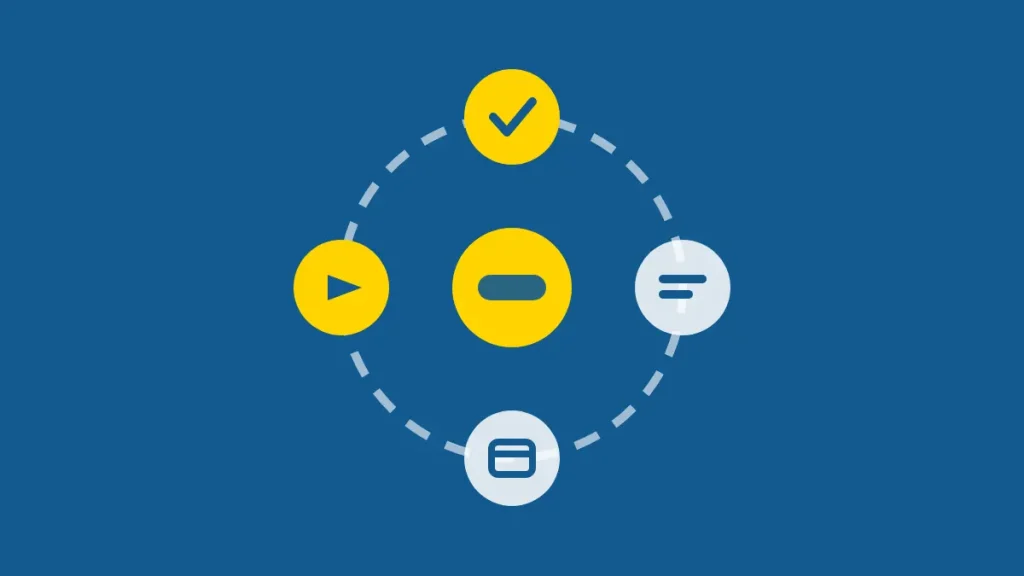
Capitalize on the high momentum:
- Assign a follow-up module within 24 hours. Reinforcement spaced days after the live session measurably improves retention; the decay curve is well documented in Why Training Fades, and Combatting the Depreciation.
- Automate the nudge. Axis LMS communication tools can trigger reminder emails and announcements automatically on a schedule, so the follow-up assignment finds the learner without anyone remembering to send it.
- Schedule the next touchpoint before they leave. Whether it is another module, a follow-up session, or a certification checkpoint, the next step should already be sitting on the learner’s dashboard.
When these steps run on automation instead of memory, the program survives busy weeks, staff changes, and the December crunch, all of which historically destroy follow-through.
How Do You Keep Both Formats Visible in One Place?
The last piece is visibility. Coordinators, facilitators, and decision-makers all need to answer the same question from one screen: where is everyone in this program?
This is where reporting earns its place in a blended model. Axis LMS reporting tracks course completions, assessment results, session attendance, and certification progress, so a blended program. Integration with calendars and other business tools keeps scheduling data in sync, and mobile access means learners can pick up a module or check a session time from wherever they are, which keeps participation from stalling between live dates.
Designing the overall mix, how much live versus self-paced, and how the two interlock, is a larger question than one article can hold. The deeper guide at Blended Learning Blueprint: Designing Flexible and Impactful Corporate Training Programs walks through that design layer in detail.
FAQ
What is blended learning in simple terms?
Blended learning combines live, instructor-led sessions with self-paced online courses. Learners complete modules on their own schedule and use live time for discussion, practice, and questions, with both formats tracked in one system.
How much pre-work should learners complete before a live session?
Twenty to thirty minutes of focused material with a short knowledge check is a practical target. The goal is shared context, not a second course. Longer pre-work reliably drops completion rates.
Can an LMS track attendance for virtual sessions as well as classroom sessions?
Yes. Axis LMS supports scheduling, rosters, and attendance tracking for both in-person and virtual instructor-led sessions, with the records stored alongside course completions and assessment scores.
How do you stop learners from skipping the self-paced portion?
Make it count. Gate session readiness on completed pre-work, keep modules short, and use automated reminders rather than manual emails. When pre-work is visibly connected to what happens in the room, completion follows.
What is the biggest mistake in blended learning programs?
Treating the two formats as separate programs. Without one system of record and automated handoffs between formats, coordination falls back on memory and spreadsheets, and both formats lose momentum.
