Manufacturing companies have unique training needs and challenges. They need an LMS that is built to address manufacturing training, not a corporate platform adapted after the fact. An LMS for manufacturing and industrial training centralizes the delivery, tracking, and management of training programs, which is precisely what a plant with rotating crews, several sites, and a safety record to protect actually requires.
The rest of the pressure comes from the work itself. Advances in automation, robotics, AI, and connected technologies are transforming how products are made, and the essential skills workers need are evolving right along with them. For learning and development teams, that creates an urgent need to reskill and upskill employees continuously and efficiently, while keeping frontline and plant teams trained, compliant, and ready.
What an LMS Does for Manufacturing and Industrial Training
A manufacturing learning management system is a platform that lets you create, deliver, and track training across industrial operations. Rather than running onboarding on paper, safety refreshers through email attachments, and machine qualification records in a spreadsheet on one supervisor’s laptop, the LMS holds all of it in one place with consistent rules about who receives what.
In day to day use, that means a plant training administrator can:
- Build courses for onboarding, machine procedures, safety topics, and refresher cycles
- Assign training by role, department, line, or site so the right people receive the right content
- Track progress and completion for every learner and flag anyone who falls behind
- Pull reports that stand up to audits, customer reviews, and management updates
Manufacturing training software is often described simply as a digital tool that aids production companies with training and skill development programs. That definition is accurate, but it undersells the operational value. The system is also the record of proof that a worker was trained, when it happened, and whether the qualification is still current.
Why Manufacturing Training Has Its Own Requirements
Manufacturing is a rapidly growing sector where new trends, techniques, and technologies arrive constantly, and professionals in it require regular training to keep their technical skills current. A platform used for compliance awareness in an office does not automatically translate to a production environment. Three constraints shape the requirement.
Factory Workers Are Not Tied to Desks
Employees are not sitting at workstations with a browser open. They are spread across the plant floor, across buildings, across shifts, and in many cases across countries. Training has to reach them where they work, on the devices they carry, in short sessions that fit around production schedules rather than competing with them. Any platform that assumes a desktop and an uninterrupted hour will struggle on a shop floor.
Skills Keep Moving
Automation and connected equipment change what operators, technicians, and maintenance staff need to know. A skill that was sufficient two years ago may now be a gap. Effective training programs track progress over time and suggest the programs a worker needs next to keep up with the latest requirements, so development is continuous instead of a once-a-year event.
Multiple Sites, One Standard
Multi-site manufacturers face an additional layer of complexity: the same procedure may need to be trained the same way in three plants, with local variations where equipment differs. Training must be centralized yet flexible, reliable yet adaptable, so a corporate standard exists without forcing identical content into environments that do not match. Specialized factory platforms are usually compared on exactly this point, along with their compliance and multi-site capabilities.
Safety and Compliance Training on the Shop Floor
Improved safety and compliance is the benefit manufacturers cite most often, and it is the easiest to justify. Safety training that lives in a filing cabinet cannot be scheduled, repeated, or verified at scale. Once it lives in an LMS, every new hire hits the required modules before stepping onto the floor, every refresher fires on schedule, and every completion is timestamped.
Compliance work also becomes a reporting exercise instead of a scramble. When a customer audit, an internal review, or an insurance question arrives, the training administrator filters completion data by site, role, or date range and exports it. Because the platform tracks the same fields across every plant, the numbers are comparable instead of being assembled from inconsistent local spreadsheets.
The larger operational payoff is consistency. When frontline and plant teams receive the same instruction through the same system, safe practices stop depending on which supervisor ran the shift that day, and performance variation narrows because the standard is documented and reinforced.
Tracking Skills, Progress, and Qualifications
Technical training is not a one-time event, and the LMS should treat it accordingly. Look for progress tracking that shows where each employee stands against the requirements for their current role and the role they are being developed toward. That visibility helps supervisors decide who is ready to move lines, who can cover a shift on unfamiliar equipment, and who needs a refresher before an assignment rather than after an incident.
Continuing education and certification tracking matter just as much. Many industrial skills carry expiration dates, and an expired qualification is functionally the same as no qualification at all. A system that tracks certification status and prompts renewal ahead of time removes the manual calendar work and the risk of a lapsed credential going unnoticed.
Useful reporting does not stop at completion percentages. Manufacturers need to answer questions like which sites have overdue safety training, which modules have unusually low completion rates, and which job roles carry the largest compliance exposure. Reports sorted by those dimensions turn training data into something a plant manager can act on this week.
Delivering Training Across Shifts and Schedules
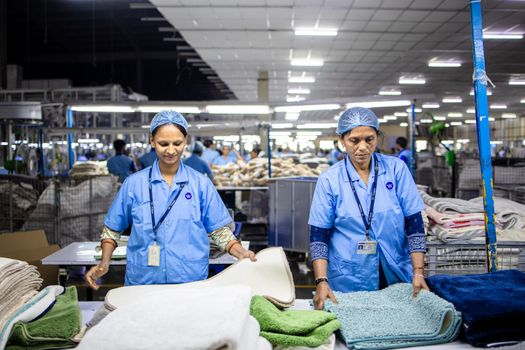
Shift work changes how training gets delivered, not just when. A crew that finishes at 6 a.m. is not going to sit through a ninety-minute session, and a crew on nights cannot attend a live class scheduled for midday. Instruction has to be available on the schedule each crew actually works.
That usually points toward three practical choices:
- Short, modular content that can be completed in twenty-minute blocks before or after a shift
- Mobile access so workers can complete assigned training on a phone or tablet, including from home
- Asynchronous delivery so nobody is locked out of required training because of their rotation
Flexibility here is not a convenience feature. If training is hard to schedule around production, it gets postponed, and postponed safety and skills training is the kind of gap that only becomes visible after something goes wrong. Removing scheduling friction is one of the quieter ways an LMS earns its cost.
Choosing Manufacturing Training Software
Before comparing platforms, write down the operational requirements that will decide the outcome. A shortlist that looks identical on a feature grid can behave very differently once it meets a real plant.
- Can assignments be driven by role, site, line, and shift rather than by individual manual enrollment?
- Does the reporting output work for audit and compliance review without manual cleanup?
- Is the learner experience usable on a phone, in a loud environment, in short sessions?
- Does certification and renewal tracking exist natively, or does it require add-ons?
- How much administrative effort does routine maintenance take each month?
- Does the vendor understand industrial training, or will your team be teaching them?
Specialised factory LMS platforms exist for a reason, and multi-site compliance support is usually where they separate from general-purpose tools. The right answer is the one your training administrators can run without a dedicated IT project behind every change.
Where Axis LMS Fits Industrial Training
Axis LMS, developed by Atrixware, is a corporate learning management system built to deliver, track, and manage online training at scale, and its feature set lines up with the demands of a manufacturing environment. Advanced reporting and analytics give training managers the compliance and completion views they need, while mobile device support keeps content accessible to deskless workers on any shift.
Online course creation tools let training teams build and revise machine, safety, and onboarding content without an outside production cycle each time. Continuing education and certification tracking handles renewals for skills that expire, and communication tools keep announcements and reminders flowing to crews who rarely check email. Branding and customization allow a multi-site organization to present training consistently, third-party integrations connect the LMS with CRM and HR systems so learner records stay aligned with employment data, and AI-powered features help teams work through administrative volume. For manufacturers that also train dealers, distributors, or external partners, e-commerce functionality supports selling courses directly through the platform.
Frequently Asked Questions
What is an LMS in manufacturing?
A manufacturing LMS is a platform that lets a production company create, deliver, and track training across its industrial operations. It holds safety modules, onboarding, machine procedures, and skills development in one system, assigns them by role or site, and produces the completion records that audits and compliance reviews require.
Can an LMS support shift workers who are not at a desk?
Yes, provided the platform is built for it. Mobile access, short modular lessons, and asynchronous delivery let workers on nights, rotating shifts, or split crews complete assigned training on the schedule they actually work. Training that has to happen during a live session at a fixed hour will get deferred on the floor.
How does an LMS improve workplace safety?
It makes safety training scheduled, repeatable, and verifiable instead of dependent on local record keeping. Refreshers fire on time, new hires complete required modules before stepping onto the floor, and completion data is timestamped. Manufacturers consistently cite improved safety and compliance as the primary benefit of running training through a centralized system.
What should manufacturers look for in industrial training software?
Prioritize role and site based assignment rules, audit-ready reporting, mobile usability, native certification and renewal tracking, and low ongoing administrative effort. Multi-site compliance support is where specialized factory platforms usually separate themselves. Ask vendors to demonstrate each of those against your own plant scenarios before deciding.
